

por Manuel Monroy Correa
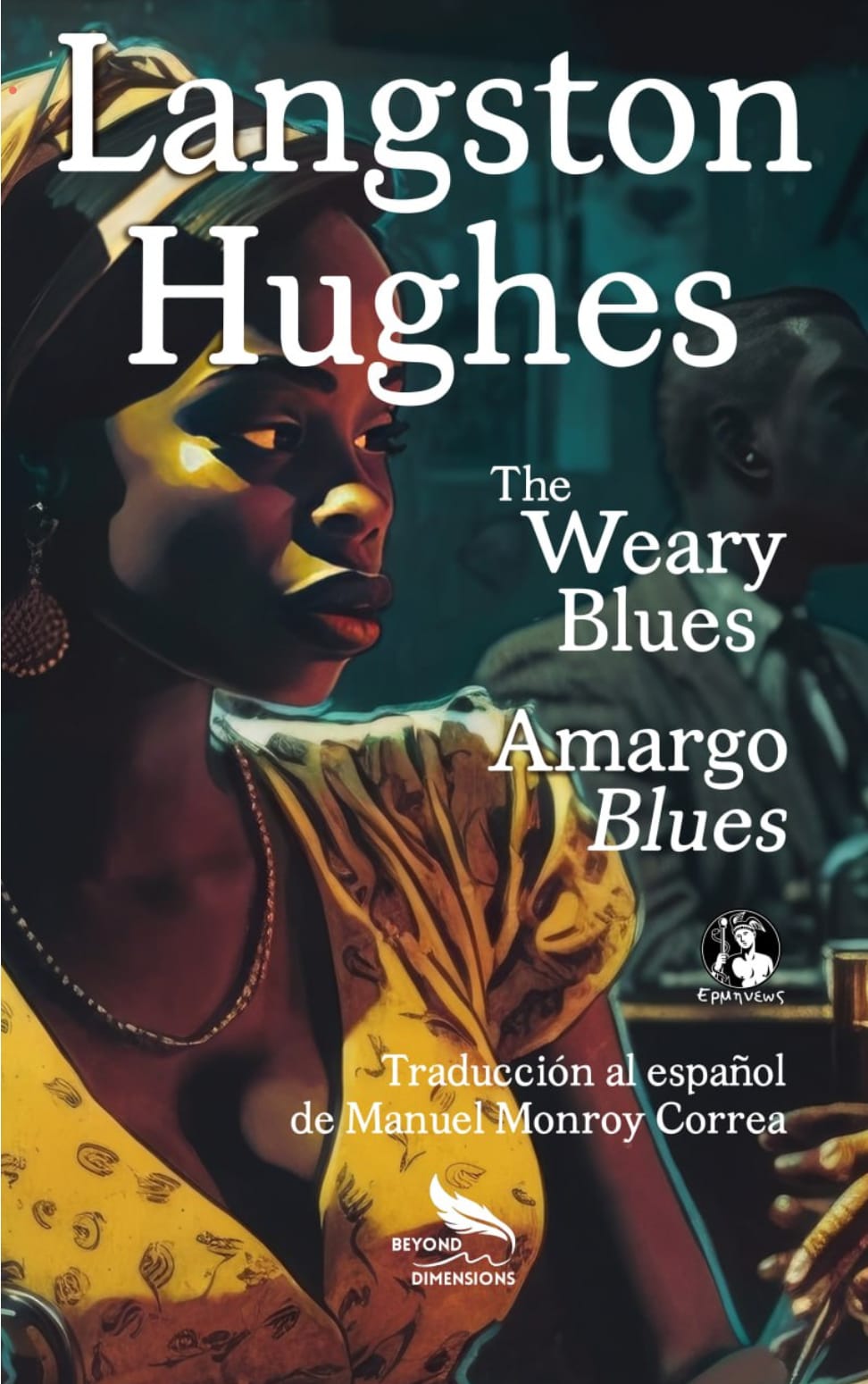
En los Estados Unidos, febrero es el mes de la memoria de la historia negra. Entre todos los grandes artistas afroestadunidenses, celebramos a Langston Hughes, poeta insigne del movimiento artístico Harlem Reinassance. Beyond Dimensions publicó en 2023 la primera edición bilingüe completa del su primer libro de poemas, The Weary Blues / Amargo Blues. Un año antes de la publicación del libro en 1926 –cuya imagen de cubierta fuera originalmente ilustrada por el artista mexicano Miguel Covarrubias– Langston Hughes decía sobre el arte negro de su época:
«Nosotros, jóvenes artistas negros, pretendemos expresar nuestros seres de oscura piel sin temor o vergüenza. Si a la gente blanca le place, nos agrada. Si no, no importa. Sabemos que somos hermosos. Y feos, también» (Nation, 1925).
Este espíritu es como una corriente que lleva cada poema del libro. Resulta emblemático, también, que el jazz y el blues se conviertan en dimensiones onto-poéticas del mismo. Una y otra, originalmente formas musicales de la existencia negra de la época, se vuelven palabra de lo vivo, con la potencia política de un advenimiento de lo socialmente posible. De este poemario cada texto sigue teniendo un lugar en nuestro mundo y en nuestro tiempo. No solo por aquellos poemas que hoy son muy conocidos como «The Negro Speaks of the Rivers» o «Epilogue», sino también por aquellos que enuncian el aspecto cotidiano de su tiempo, a quienes también va dirigida su poesía.
Langston Hughes fue una voz para su comunidad y para las ideas de una sociedad sin discriminación. Tales ideas iban cobrando fuerza a medida que el poeta era conocido, también, por dar pláticas públicas de perspectiva comunista. Su poesía no deja de ser abiertamente incómoda en un momento en el que el mismo FBI veía en él un motivo de seguridad y una caricatura de artista-propagandista a la vez. Es tan potente el discurso de sus textos, que la campaña política de Donald Trump llega a parodiar el título del poema «Let America Be America Again».
También, a propósito de cumplirse, el 1o. de febrero, 56 años de de nacimiento, rememoramos al poeta negro cuyos vínculos con América Latina son, también, parte de su propia historia y de la nuestra.
—————–
A note on Langston Hughes and Black History Month
In the United States, February is Black History Remembrance Month. Among all the great African-American artists, we celebrate Langston Hughes, a leading poet of the Harlem Reinassance art movement. Beyond Dimensions published the first full bilingual edition of his first book of poems, The Weary Blues / Amargo Blues, in 2023. A year before the book’s publication in 1926 – the cover image of which was originally illustrated by Mexican artist Miguel Covarrubias – Langston Hughes said of the black art of his time:
“We younger negro artists who create now intend to express our individual dark-skinned selves without fear or shame. If white people are pleased we are glad. If they are not, it doesn’t matter. We know we are beautiful. And ugly too.” —Langston Hughes, published in the Nation, 1925.
This spirit is like a current that carries every poem trhoughout the book. It is also emblematic that jazz and blues become onto-poetic dimensions of it. Both, originally musical forms of the black existence of the time, become words of the living, with the political potency of an advent of the socially possible. From this collection of poems, each text still has a place in our world and in our time. Not only for those poems which are well known today, such as «The Negro Speaks of the Rivers» or «Epilogue», but also for those poems which enunciate the everyday aspect of his time, to whom his poetry is also addressed.
Langston Hughes was a voice for his community and for the ideas of a society without discrimination. Such ideas were gaining momentum as the poet was also known to give public talks with a communist perspective. His poetry was openly uncomfortable at a time when the FBI itself saw him as both a security threat and a caricature of an artist-propagandist. The discourse of his texts is so powerful that Donald Trump’s political campaign even parodied the title of the poem «Let America Be America Again».
Also, on the occasion of the 56th anniversary of his birth on 1 February, we remember the black poet whose links with Latin America are also part of his own history and ours.

Manuel Monroy Correa (México, 1976), poeta heracliteano, según su propia designación. Autor de Auspicio (Casa Editorial Abismos, 2017), El [llanto del] crepúsculo (Hebel, 2017) y otros libros. Textos suyos han aparecido en revistas literarias y académicas, digitales e impresas. Tiene proyectos de pintura digital y de audio («Sonoremas»). Doctor en Letras Modernas por la Universidad Iberoamericana.
Mastodon: @monmac@anartis.org
Pixelfed: monmac@picto.anartis.org
Deja un comentario