

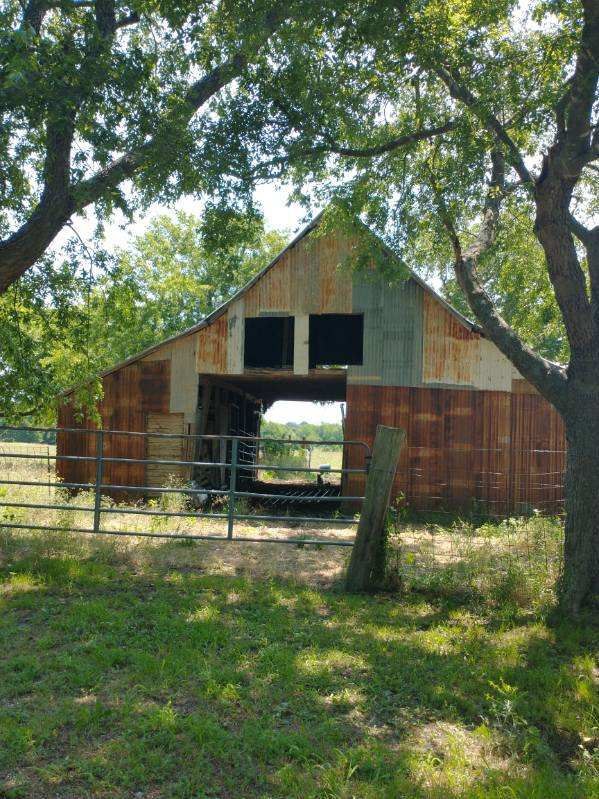
by L.V. Davis
Poems from «The Blackland Blues» by L.V. Davis, copyright 1998,1999,2000,2007
FOREWORD
I hope to present as a novel in free verse, as opposed to a long collection of poems or as an anthology. It is a compilation of my family’s experiences during our eight years in Fairlie and of the land’s unrelenting pull on people to return to their homes.
In «The Red Pony,» Steinbeck addressed this mental attachment to the land with an old Paisano who had returned to die. Larry McMurtry, who has returned to Archer City and filled old, abandoned buildings with his book collection, had his Gus require Captain Call to drag his body to a travois all the way from Montana to central Texas so he could be buried by a stream where he had courted his sweetheart. The pull of the land is undeniable.
During the 1950s, three things happened to our family while at Fairlie which rent us apart. Those three are the death of my mother in 1952 during childbirth, the onset of a terrible drought, the worst in Texas, and the setting by the government authorities of a cotton acreage allotment, to lift and stabilize the price of cotton.
The landless always leave in hard times. We were landless. Those with land stay, for the obvious, viable reason of maintaining ownership. This era saw the disappearance of the sharecropper or tenant farmer all over the southwest, who was being lured simultaneously by new jobs in the cities.
The landholders who stay, persevere, until a grandson or granddaughter, not a farmer, with no appreciation for the struggle, sells the land, abruptly ending the heritage. The land has no unexplainable pull for the grandchild who was not raised on the land.
In the 1950s, Fairlie was a small town. It had a two-story, brick schoolhouse with a gymnasium and a fair basketball team. It boasted two or three active churches, a post office, a grocery store, a garage owned by Fred Cox, and had its economy anchored – as it still does – by a cotton gin. Once before that, it had had a bank.
Now, Patterson’s grocery is closed, the school is gone, the Methodist church building is a community center, the post office has disappeared, and the gin is about under. It has become, like many small country towns, a community. I would like to help it grow or, at least, survive. I may need to go home soon. I have no aspirations to make Fairlie into another Archer City, I just want it to be there when I need it.
LV Davis
August 15, 2000

Of glue and Salt
Of Glue and Salt – Joan

The glue that
held us together,
we called her.
Salt of the earth, especially our small piece of Blackland.
With Mama gone, someone had to cook.
on kerosene, for seven.
Someone had to sweep,
sew and mend.
Someone had to wash clothes, in a big black pot,
on an open fire,
to be hanged
on the barnyard fence, when clothes line ran out.
At thirteen she assumed the role,
and taught us,
for our lifetimes,
what glue and salt were all about.
Mrs. Walker Hugged Me
My first day of school
fell about two weeks
after I told Mama bye.
I didn't know what to expect
but was met by Mrs. Brown and Inez Walker.
Mrs. Walker was a pretty woman,
with dark brown hair.
She led me into the room where
grades one through three
had sessions.
She said, "We’re glad to have you here."
Then, she bent down and hugged me.

I've had hugs
from other women since,
but none that I remembered.
for forty-nine years.
Farmers
Men who had seen Korea,
and France,
returning to plant seeds in
the ground,
and in their women,
praying for rain
to make things grow,
and growing sons and daughters,
who would learn to pray for rain.
Bent under the August,
Texas sun,
feeling the old men's pain,
with chaffed hands full of cotton burr holes,
and sunburned necks
from pulling fluff-filled bolls,
trusting in nature and God,
to lift a livelihood from the Blackland sod,
the dark paste sticking
on every walking creature,
becoming a fixture
in the lives of men
who only wanted water
to fill the Blackland cracks,
that had ruined their backs,
Bent,
hurting,
never broken,
with the unspoken doubts,
of a good crop in the Fairlie dirt.
The Blackland Blues
Traslated by Keith Grimes

Poemas tomados de «The Blackland Blues» by L.V. Davis, copyright 1998,1999,2000,2007
PREFACIO
Espero presentarla como una novela en verso libre, en lugar de una larga colección de poemas o como una antología. Es una compilación de las experiencias de mi familia durante nuestros ocho años en Fairlie y de la implacable atracción de la tierra para que las personas regresen a sus hogares.
En «The Red Pony», Steinbeck abordó este apego mental a la tierra con un viejo paisano que había regresado para morir. Larry McMurtry, quien regresó a Archer City y llenó edificios viejos y abandonados con su colección de libros, hizo que su Gus pidiera al Capitán Call arrastrar su cuerpo en un travois desde Montana hasta el centro de Texas para que pudiera ser enterrado junto a un arroyo donde había cortejado a su novia. El apego a la tierra es innegable.
Durante la década de 1950, tres cosas le sucedieron a nuestra familia mientras estábamos en Fairlie que nos separaron. Esas tres son la muerte de mi madre en 1952 durante el parto, el inicio de una terrible sequía, la peor en Texas, y el establecimiento por parte de las autoridades gubernamentales de una asignación de superficie de algodón, para elevar y estabilizar el precio del algodón.
Los sin tierra siempre se van en tiempos difíciles. No teníamos tierras. Aquellos con tierra se quedan, por la razón obvia y viable de mantener la propiedad. Esta época vio la desaparición del aparcero o arrendatario en todo el suroeste, que estaba siendo atraído simultáneamente por nuevos empleos en las ciudades.
Los terratenientes que se quedan perseveran, hasta que un nieto o nieta, no un agricultor, sin aprecio por la lucha, vende la tierra, terminando abruptamente con el patrimonio. La tierra no tiene una atracción para el nieto que no se crio en la tierra.
En la década de 1950, Fairlie era una ciudad pequeña. Tenía una escuela de ladrillo de dos pisos con un gimnasio y un equipo de baloncesto. Contaba con dos o tres iglesias activas, una oficina de correos, una tienda de comestibles, un garaje propiedad de Fred Cox, y tenía su economía anclada -como todavía lo hace- por una desmotadora de algodón. Antes de eso, había tenido un banco.
Ahora, la tienda de comestibles de Patterson está cerrada, la escuela se ha ido, el edificio de la iglesia metodista es un centro comunitario, la oficina de correos ha desaparecido y la ginebra está a punto de llegar. Se ha convertido, como muchas pequeñas ciudades rurales, en una comunidad. Me gustaría ayudarla a crecer o, al menos, sobrevivir. Es posible que tenga que irme a casa pronto. No tengo aspiraciones de convertir a Fairlie en otra Archer City, solo quiero que esté allí cuando la necesite.
LV Davis
15 de agosto de 2000

De pegamento y Sal
De pegamento y sal – Joan

El pegamento que
nos mantuvo unidos,
La llamamos
Sal de la tierra, especialmente nuestro pequeño pedazo de Blackland.
Con mamá fuera, alguien tenía que cocinar
en queroseno, para siete.
Alguien tenía que barrer,
coser y reparar.
Alguien tenía que lavar la ropa, en una gran olla negra,
en un fuego abierto,
colgar
en la cerca del corral, cuando se agotó el tendedero.
A los trece años asumió el papel,
y nos enseñó,
para nuestras vidas,
de qué se trataba el pegamento y la sal.
La Señora Walker me abrazó
Mi primer día de clases
cayó alrededor de dos semanas
después de que le dije adiós a mamá.
No sabía qué esperar
pero fue recibido por la Sra Brown e Inez Walker.
La Sra Walker era una mujer bonita,
con cabello castaño oscuro,
Ella me llevó a la habitación donde
grados uno a tres
tenían sesiones.
Ella dijo: "Estamos contentos de tenerte aquí".
Luego, se inclinó y me abrazó.

He tenido abrazos
de otras mujeres,
pero ninguno que yo recordara.
durante cuarenta y nueve años.
Agricultores
Hombres que habían visto Corea,
y Francia,
Volviendo a plantar semillas en
el suelo,
y en sus mujeres,
Orando por la lluvia
para hacer crecer las cosas,
e hijos e hijas en crecimiento,
que aprendería a orar por la lluvia.
Doblado bajo el agosto,
sol de Texas,
sintiendo el dolor de los viejos,
con las manos llenas de agujeros de rebabas de algodón,
y cuellos quemados por el sol
de arrancar cápsulas llenas de pelusa,
confiando en la naturaleza y en Dios,
para ganarse la vida con el césped de Blackland,
La pasta oscura pegada
en cada criatura andante,
convertirse en un elemento fijo
en la vida de los hombres
que solo querían agua
para llenar las grietas de Blackland,
que les había arruinado la espalda,
torcido
lastimando
pero nunca roto,
con las dudas tácitas,
de una buena cosecha en la tierra de Fairlie.

Larry Valton (L. V.) Davis 1945
L. V. graduated from the University of North Texas in 1972 with a degree in English and theatre.
In 1980, he published his first novel, Dallas Blue. Several more followed. Blackland Blues, a novel in free verse soon to be published by Beyond Dimensions, has never been published. Beyond Dimensions is proud to be L.V.’s new publisher and we look forward to a long and rewarding relationship.
L.V. returned to the Blackland, He now lives in Cumby, Texas with his wife, Sandra where he reads, writes, and tends the land. It is not the same, the cotton is gone, but it is his.
Deja un comentario