

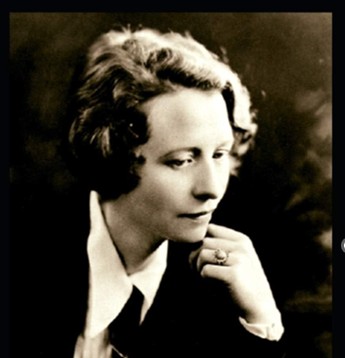
by Keith Grimes
Edna St. Vincent Millay is one of the most influential voices in the history of American poetry, renowned for her lyrical brilliance, bold individuality, and unwavering devotion to social causes. Her life and works inspire readers, scholars, and artists, reflecting the complexities of love, freedom, and activism in the early twentieth century.
Millay’s poetic achievements and passionate commitment to social issues have left a lasting impression on American literature. Through her art, she explored themes of love, freedom, and activism, establishing herself as a unique and powerful figure whose influence continues to resonate throughout generations.
Born on February 22, 1892, in Rockland, Maine, Edna Millay was the eldest daughter of Cora Lounella Buzzell and Henry Tolman Millay. Her parents’ marriage was troubled, and they divorced when she was young, leaving her mother to raise her and her two sisters, Norma and Kathleen, in modest circumstances. Cora, a nurse, became Millay’s primary influence, nurturing her literary talents and encouraging independence and intellectual curiosity. The Millay household was unconventional, filled with books and music, fostering the children’s early interest in poetry and performance.
Cora’s intellectual curiosity and love of literature deeply influenced her young children’s upbringings, as she encouraged independent thought, fostered a passion for books and music, and created a nurturing environment that valued learning and creativity. Norma was an actor performing with the Provincetown Players and later on Broadway. Kathleen was an accomplished poet and novelist.
Education
Millay’s academic journey began in local Maine schools, where her innate talent was evident. In 1912, when she was just nineteen years old, she submitted her celebrated poem “Renascence” to a national poetry contest sponsored by The Lyric Year, an annual anthology seeking to discover new poetic talent. She earned national attention, leading to her acceptance at Vassar College.
The Lyric Year was an annual literary journal, published from 1912 to 1914 by Mitchell Kennerly, a prominent New York publisher, dedicated to discovering and promoting new poetic talent. During its brief run, it provided a platform for emerging poets, helping launch their careers by publishing their work and introducing them to a wider audience. It gained national attention by sponsoring poetry contests. Its influence was particularly notable in early twentieth-century American literary circles, serving as a springboard for writers seeking recognition and support.
“Renascence” is an ambitious and deeply philosophical meditation on the nature of suffering, empathy, and spiritual awakening. Written in rhymed couplets, the poem explores transcending one’s limitations and feeling a profound connection with all living things. Although “Renascence” did not win the contest’s top prize—much to the surprise of readers and critics—it received widespread acclaim, and many believed it deserved first place. The controversy surrounding the judging brought Millay significant publicity, and her powerful reading of the poem at the award ceremony further cemented her reputation as a promising young poet. The attention “Renascence” attracted played a crucial role in Millay’s subsequent acceptance to Vassar College and launched her literary career.
Vassar College, founded in 1861 in Poughkeepsie, New York, was one of the first degree-granting institutions of higher education for women in the United States. Known for its rigorous academics and commitment to progressive ideals, Vassar became a notable center for nurturing creative minds and fostering intellectual independence. During Millay’s time, the college was gaining national recognition for its liberal arts curriculum and vibrant campus life.
Among the influential professors Millay encountered were Laura J. Wylie, a respected English scholar known for her support of women’s education; Ella M. F. Russell, who encouraged young writers; and Gertrude Buck, whose innovative approaches to rhetoric and composition left a lasting mark on Millay and her contemporaries. These mentors helped shape Millay’s literary development and inspired her enduring commitment to the arts and social issues.
Millay matriculated at Vassar in 1913. At Vassar, Millay thrived, honing her craft, participating in theatrical productions, and developing her distinctive poetic voice. She graduated in 1917, despite occasional clashes with the college administration over her rebellious spirit and unconventional behavior, which would later become hallmarks of her public persona.
Early Career

During her early literary ascent, Millay contributed several poems to The Masses, the influential radical magazine of the 1910s. Among her best-known works published in its pages were “The Philosopher” and “Interim,” both appearing in 1917. These poems embodied Millay’s signature style: lyrical intensity, emotional candor, and a keen engagement with themes of love, freedom, and social conscience. The Masses provided Millay a vibrant platform for her voice at a pivotal moment in American literary history, placing her alongside other progressive poets and thinkers of her era.
The Masses was a pioneering American magazine published monthly from 1911 to 1917, renowned for its radical political stance and commitment to social change. Edited by a collective of writers and artists, it became a leading voice for progressive causes, championing labor rights, social justice, and artistic experimentation. The magazine featured contributions from prominent figures such as John Reed, Max Eastman, and Floyd Dell, as well as striking artwork by illustrators like Art Young and Boardman Robinson. Its blend of provocative essays, bold cartoons, and innovative poetry positioned The Masses at the forefront of early twentieth-century American intellectual life and the burgeoning modernist movement. The publication was eventually shut down by the U.S. government under the Espionage Act due to its outspoken opposition to World War I. Still, its legacy endures as a symbol of artistic and political dissent.
Millay published numerous collections of poetry, including “A Few Figs from Thistles” and “The Harp-Weaver and Other Poems,” which won her the Pulitzer Prize for Poetry in 1923. Millay also wrote plays and essays, becoming a prominent literary figure in the early twentieth century.
Millay was also known for translating French works into English, most notably Charles Baudelaire’s poetry. Her translation of Baudelaire’s poetry was a significant milestone in her literary pursuits. Baudelaire, a renowned French poet best known for his collection «Les Fleurs du mal» («The Flowers of Evil»), greatly influenced modern poetry with his innovative style and exploration of themes such as beauty, decadence, and existential longing. Millay admired Baudelaire’s lyricism and sought to bring his evocative verses to English-speaking audiences, capturing both the intricate rhythms and the emotional intensity of his work.
Her translation required not only linguistic skill but also a deep appreciation for the nuances of French poetry and the ability to render them faithfully in English. Millay’s efforts were praised for their accuracy and poetic sensibility, helping to introduce Baudelaire’s artistry to a broader readership. This project reinforced Millay’s reputation as a versatile and accomplished literary figure, capable of bridging cultural and linguistic divides through her writing.
In addition to Baudelaire, Millay’s interest in translation reflected her broader engagement with European literature and her desire to expand the boundaries of American poetry. Her work as a translator complemented her original poetry and plays, demonstrating her intellectual curiosity and dedication to literary excellence.
In addition to her creative work, she was an activist, advocating for social causes such as women’s rights and pacifism. Millay’s reputation extended beyond her writing, as she was recognized for her performances, lectures, and involvement with the literary and artistic circles of Greenwich Village and beyond.
Participation in Readings, Lectures, and Performances
Millay’s reputation extended beyond her writing, as she was recognized for her performances, lectures, and involvement with the literary and artistic circles of Greenwich Village and beyond. She frequently gave public readings of her poetry, captivating audiences with her expressive voice and dramatic presence.
For example, Millay was renowned for her powerful performances at venues such as the MacDowell Colony, the Yaddo artists’ retreat, and numerous literary salons in Greenwich Village, where she would recite poems like “Renascence,” “First Fig,” and “The Ballad of the Harp-Weaver.”
The MacDowell Colony, a prestigious artists’ residency in Peterborough, New Hampshire, was founded in 1907 and has been in continuous operation since then. As of 2026, the residency has been supporting artists for 119 years.
MacDowell has hosted a wide range of other influential figures throughout its history, including Leonard Bernstein, Aaron Copland, Thornton Wilder, and Alice Walker. Many recipients of MacDowell’s residencies have gone on to win prestigious awards, such as Pulitzer Prizes, National Book Awards, and MacArthur Fellowships. The colony’s impact extends beyond individual achievements, as it has helped shape the United States’ cultural landscape by nurturing generations of creative talent.
Yaddo, another celebrated artists’ retreat, is situated in Saratoga Springs, New York. Established in 1900, Yaddo has long served as a sanctuary for writers, composers, visual artists, and other creative professionals seeking solitude and inspiration. Residencies are open to both emerging and established artists from the United States and abroad.
Literary Events
In Greenwich Village, Millay became a central figure among Bohemian writers, artists, and intellectuals, participating in lively debates and championing progressive causes. Millay immersed herself in the vibrant artistic community that flourished in lower Manhattan during the early twentieth century. The Village was a hub for avant-garde creativity, political activism, and social experimentation, attracting free thinkers and radicals from across the country. Millay was closely associated with notable literary and political circles, including contributors to the radical magazine The Masses and the Provincetown Players theater group. She formed friendships and collaborations with influential figures such as Floyd Dell, John Reed, and Susan Glaspell. Through her poetry readings, public lectures, and theatrical performances, Millay advocated for women’s rights, pacifism, and sexual freedom. Her wit, charisma, and commitment to social justice made her a beloved icon of the Village’s bohemian scene, and her Greenwich Village years played a crucial role in shaping both her literary output and her public persona as a bold and outspoken cultural leader.
Literary salons in Greenwich Village were informal gatherings held in homes, cafes, and cultural venues throughout lower Manhattan, especially in the early twentieth century. These salons brought together writers, poets, artists, and intellectuals for lively discussions, readings, and performances. Greenwich Village itself was a vibrant hub of bohemian culture and progressive ideas, providing a welcoming space for Millay and her contemporaries to share their work and engage with audiences.
Her readings often drew large crowds and were praised by critics for their emotional intensity and theatrical flair. These public events reinforced her status as a leading figure in American literary circles.
Millay’s performances were celebrated for their theatrical flair, blending her poetic talents with her background in stage acting, which she developed during her years at Vassar College. In Greenwich Village, she became a central figure among bohemian writers, artists, and intellectuals, participating in lively debates and championing progressive causes. She was a central figure in additional venues, including homes, cafes, and cultural spaces throughout lower Manhattan.
Minetta Tavern: Located at 113 MacDougal Street in Greenwich Village was established in 1937 by Eddie «Minetta» Sieveri. Over the decades, the tavern became a well-known gathering place for poets, writers, and artists, celebrated for its literary clientele and bohemian atmosphere. Notable figures who frequented Minetta Tavern include Ernest Hemingway, Ezra Pound, E.E. Cummings, and Dylan Thomas. Its cozy, vintage ambiance and proximity to other Village landmarks made it a favored spot for informal readings, lively discussions, and creative exchanges among the artistic community. The original Minetta Tavern closed in 2008, after which it was renovated and reopened under new ownership.
Caffe Cino: Located at 31 Cornelia Street in Greenwich Village, Caffe Cino was founded in and operated by Joe Cino in 1958. It quickly became recognized as the birthplace of off-off-Broadway theater, providing an experimental stage for writers, performers, and directors who sought creative freedom outside the mainstream. The intimate coffeehouse setting fostered informal readings, discussions, and performances, attracting a vibrant community of artists and bohemians. Notable acts and playwrights associated with Caffe Cino include Lanford Wilson, Sam Shepard, and Robert Patrick, whose early works were presented there. The venue played a crucial role in launching the careers of many artists and in shaping the avant-garde theatrical movement in New York City.
The Village Vanguard: Though best known for jazz, this iconic club also hosted poetry readings and literary events. Located at 178 Seventh Avenue South in Greenwich Village, New York City. The Village Vanguard was founded by Max Gordon in 1935. It has been in continuous operation since its opening and is renowned as one of the world’s most famous jazz clubs. Over the decades, the Vanguard has hosted an extraordinary list of notable guests and performers, including John Coltrane, Miles Davis, Thelonious Monk, Bill Evans, Sonny Rollins, and countless other legendary jazz musicians. Its intimate, triangular basement setting and commitment to live music have made it a cornerstone of New York’s cultural and artistic scene.
The club also hosted poetry readings and literary events. In addition to Millay, writers and poets such as Allen Ginsberg, whose readings helped fuel the Beat Generation’s presence in Greenwich Village, have appeared at the Vanguard. Other notable literary figures who have given readings or participated in events at the Village Vanguard include Frank O’Hara, Amiri Baraka (LeRoi Jones), and Kenneth Koch. These appearances contributed to the club’s reputation as a vibrant cultural hub for both music and literature, drawing creative minds from across New York City’s artistic community.
Minetta Tavern: Located at 113 MacDougal Street in Greenwich Village, was established in 1937 by Eddie «Minetta» Sieveri. It operated as a beloved café and restaurant for decades, closing in 2008, then reopened under new ownership after renovation. The tavern was famous for attracting poets, writers, and artists, cultivating a bohemian atmosphere and serving as a gathering place for literary figures. Notable guests, including Millay, were Ernest Hemingway, Ezra Pound, E.E. Cummings, and Dylan Thomas, who frequented the tavern for its cozy, vintage ambiance and proximity to other Village landmarks, making it a favored spot for informal readings, lively discussions, and creative exchanges among the artistic community.
Private Apartments in the Village: Many salons were hosted by writers or patrons in their homes, such as the gatherings organized by Floyd Dell, where Millay and her contemporaries shared new work and debated ideas.
The Liberal Club: The Liberal Club was one of Greenwich Village’s most influential intellectual and social centers during the early twentieth century. Originally located at 137 MacDougal Street, the club attracted a diverse community of writers, radicals, artists, and activists who gathered to exchange ideas, debate progressive causes, and foster creative collaborations. The club was known for its open-door policy, welcoming anyone interested in free thought and social reform, regardless of background or status. Notable figures, in addition to Millay, included John Reed, Max Eastman, and Upton Sinclair, who participated in the club’s events, contributing to its reputation as a breeding ground for avant-garde literature, political activism, and social experimentation.
Residences and Their Impact
Millay’s adult life was marked by several notable residences. After her time at Vassar, she moved to New York City, immersing herself in the vibrant Greenwich Village literary scene. In 1925, she and her husband purchased Steepletop, a farm in Austerlitz, New York, which became her primary residence and creative retreat. Steepletop provided Millay with solace and inspiration, and she wrote many of her later works there. The property is now preserved as a museum dedicated to her legacy.
Personal Relationships
In 1923, Millay married Eugen Jan Boissevain, a Dutch-born businessman known for his progressive views, cosmopolitan background, and ardent advocacy of women’s rights. Boissevain was previously married—his first wife, feminist activist Inez Milholland, had died in 1916—and he brought to the relationship a deep appreciation for intellectual freedom and social reform. Their marriage was unconventional, characterized by mutual respect, independence, and a shared commitment to personal and artistic autonomy. Both Millay and Boissevain agreed to maintain their individuality, openly accepting Millay’s desire for creative solitude and occasional romantic freedom, which allowed her to pursue her literary and personal passions without constraint.
Boissevain played a central role in supporting Millay’s career. He managed her public engagements, handled correspondence, and shielded her from the demands of fame, ensuring she had the time and space necessary to write. He also oversaw the restoration and running of their home, Steepletop, in Austerlitz, New York, where Millay composed many of her later works. Boissevain’s devotion extended to Millay’s physical and emotional well-being, especially during periods of illness and exhaustion stemming from her intensive work schedule and public commitments.
The couple’s partnership endured for over twenty-five years. Boissevain’s unwavering support and nurturing presence were crucial as Millay navigated the complexities of a literary life, public scrutiny, and personal challenges. His death in 1949 was a profound loss for Millay; she was devastated by his passing, and the grief contributed significantly to her own decline in health and productivity during her remaining years.
Millay was known for her passionate and unconventional romantic involvements, often rejecting societal norms in favor of personal freedom. Her relationships with both men and women, including brief affairs with poets and intellectuals, contributed to her reputation as a fiercely independent and modern woman. Among her notable lovers were George Dillon and the journalist Floyd Dell. Millay’s close friendships with her sisters and her mother were equally important, providing emotional support throughout her life.
Throughout her career, Millay benefited from the guidance of several mentors and influential figures. Her mother, Cora, remained her lifelong confidante and supporter. Literary contemporaries such as Floyd Dell and John Reed, both associated with the Greenwich Village bohemian scene and the radical magazine The Masses, played pivotal roles in shaping her early career and political outlook.
Literary contemporaries such as Floyd Dell and John Reed, both associated with the Greenwich Village bohemian scene and The Masses, played pivotal roles in shaping her early career and political outlook. Floyd Dell, in particular, was a prominent novelist, critic, and editor deeply involved in the progressive movements of the early twentieth century. Known for his advocacy of social reform and literary experimentation, Dell was a central figure in Greenwich Village’s intellectual circles. He often hosted salons in his apartment, where Millay and other writers gathered to share their work and engage in spirited debates about politics, art, and society. Dell’s encouragement and editorial guidance were instrumental in helping Millay navigate the literary world, and their friendship provided her with valuable support as she developed her poetic voice and progressive ideals. In addition to his role as a mentor and friend, Floyd Dell was also Millay’s lover for a time during her early years in Greenwich Village. Though their affair was relatively brief, it was significant in shaping both Millay’s emotional life and her literary development, as Dell’s encouragement and affection provided her with confidence and support during a formative period of her career.
Millay’s relationship with George Dillon was both romantic and deeply collaborative. Dillon, a poet and editor, met Millay in the late 1920s, and their connection quickly blossomed into an intense affair. Millay’s affair with Dillon inspired several of her later sonnets, reflecting the emotional complexity and artistic collaboration of their relationship.
Another friend, Dorothy Parker, widely known as «Dot» Parker, was a celebrated poet, writer, and critic who became a central figure in New York’s literary scene during the early twentieth century. Renowned for her sharp wit and satirical style, Parker contributed to publications such as Vanity Fair and The New Yorker, and was a founding member of the Algonquin Round Table—a group of influential writers, journalists, and actors who gathered regularly at the Algonquin Hotel to exchange ideas and clever banter. Her poetry and short stories often explored themes of love, heartbreak, and urban life, winning her acclaim and numerous awards. Her outspoken views, sardonic humor, and commitment to social justice made her an influential voice among artists and intellectuals of her era.
In addition to her relationships with men and platonic relationships with women, Millay also formed intimate connections with women, reflecting her openness to love regardless of gender. Notably, she was romantically involved with the writers and artists who frequented the Village, including close emotional and possibly romantic bonds with women such as a journalist (not the famous actor), Katharine Hepburn, and fellow poet Elinor Wylie. These relationships, though often kept private in her era, were significant in Millay’s personal and creative life, further contributing to her reputation as a trailblazer who challenged conventional expectations of love and identity.
In 1917, during her final year at Vassar College, Millay met and befriended Edith Wynne Matthison, the British silent film actress who was fifteen years older than Millay. Millay was immediately captivated by Matthison’s passionate spirit, striking beauty, and sophisticated style. What began as a platonic admiration soon deepened into a powerful romantic infatuation. Matthison, known for her unapologetic embrace of life’s pleasures, reciprocated Millay’s feelings, culminating in a kiss and an invitation to her summer home. This blossoming relationship sparked a series of intensely expressive letters. These letters, preserved in The Letters of Edna St. Vincent Millay, along with Millay’s reflections on her love of music and her playfully lewd self-portrait, capture the unique blend of passionate longing and proud vulnerability that defines the experience of falling in love.
Millay’s correspondence with Edith reflected her uncompromising honesty. She cautioned Edith that her candor stemmed from the authenticity she felt when thinking of her, writing, «Listen; if ever in my letters to you, or in my conversation, you see a candor that seems almost crude, — please know that it is because when I think of you I think of real things, & become honest, — and quibbling and circumvention seem very inconsiderable.»

Millay’s letters were filled with heartfelt appeals. She implored Edith, «I will do whatever you tell me to do. … Love me, please; I love you. I can bear to be your friend. So ask of me anything. … But never be ‘tolerant,’ or ‘kind.’ And never say to me again — don’t dare to say to me again — ‘Anyway, you can make a trial’ of being friends with you! Because I can’t do things that way. … I am conscious only of doing the thing that I love to do — that I have to do — and I have to be your friend.»
Millay articulated the emotional intensity and «proud surrender» that accompanies genuine love, writing, «You wrote me a beautiful letter, — I wonder if you meant it to be as beautiful as it was. — I think you did; for somehow I know that your feeling for me, however slight it is, is of the nature of love. … nothing that has happened to me for a long time has made me so happy as I shall be to visit you sometime. — You must not forget that you spoke of that, — because it would disappoint me cruelly. … I shall try to bring a few quite nice things with me; I will get together all that I can, and then when you tell me to come, I will come, by the next train, just as I am. This is not meekness, be assured; I do not come naturally by meekness; know that it is a proud surrender to you; I don’t talk like that to many people.»
George Dillon was an accomplished poet and editor, best known for his collaborations with Millay. His poetry often explored themes of love, loss, and existential reflection, earning him recognition with works such as «The Flowering Stone,» which won the Pulitzer Prize for Poetry in 1932. Dillon also co-translated «Flowers of Evil» by Charles Baudelaire with Millay, bringing French symbolism to an English-speaking audience and making a significant contribution to literary translation. His style was marked by lyrical intensity and emotional depth, resonating with readers and critics alike.
Self-portrait
In July 1920, Millay spent an evening with two of her close friends: poet John Peale Bishop and Edmund Wilson, the esteemed literary critic and Vanity Fair’s managing editor. The group entertained themselves by composing poetic self-portraits, a creative exercise that allowed each participant to explore their own character through verse. Millay’s contribution stood out, capturing her lively spirit, acute self-awareness, and easy embrace of sensuality. This poetic self-portrait was published in her Letters.
E. St. V. M.
Hair which she still devoutly trusts is red.
Colorless eyes, employing
A childish wonder
To which they have no statistic
Title.
A large mouth,
Lascivious,
Aceticized by blasphemies.
A long throat,
Which will someday
Be strangled.
Thin arms,
In the summer-time leopard
With freckles.
A small body,
Unexclamatory,
But which,
Were it the fashion to wear no clothes,
Would be as well-dressed
As any.
Renascence
All I could see from where I stood
Was three long mountains and a wood;
I turned and looked another way,
And saw three islands in a bay.
So with my eyes I traced the line
Of the horizon, thin and fine,
Straight around till I was come
Back to where I’d started from;
And all I saw from where I stood
Was three long mountains and a wood.
Over these things I could not see;
These were the things that bounded me;
And I could touch them with my hand,
Almost, I thought, from where I stand.
And all at once things seemed so small
My breath came short, and scarce at all.
But, sure, the sky is big, I said;
Miles and miles above my head;
So here upon my back I’ll lie
And look my fill into the sky.
And so I looked, and, after all,
The sky was not so very tall.
The sky, I said, must somewhere stop,
And—sure enough!—I see the top!
The sky, I thought, is not so grand;
I ‘most could touch it with my hand!
And reaching up my hand to try,
I screamed to feel it touch the sky.
I screamed, and—lo!—Infinity
Came down and settled over me;
Forced back my scream into my chest,
Bent back my arm upon my breast,
And, pressing of the Undefined
The definition on my mind,
Held up before my eyes a glass
Through which my shrinking sight did pass
Until it seemed I must behold
Immensity made manifold;
Whispered to me a word whose sound
Deafened the air for worlds around,
And brought unmuffled to my ears
The gossiping of friendly spheres,
The creaking of the tented sky,
The ticking of Eternity.
I saw and heard, and knew at last
The How and Why of all things, past,
And present, and forevermore.
The Universe, cleft to the core,
Lay open to my probing sense
That, sick’ning, I would fain pluck thence
But could not,—nay! But needs must suck
At the great wound, and could not pluck
My lips away till I had drawn
All venom out.—Ah, fearful pawn!
For my omniscience paid I toll
In infinite remorse of soul.
All sin was of my sinning, all
Atoning mine, and mine the gall
Of all regret. Mine was the weight
Of every brooded wrong, the hate
That stood behind each envious thrust,
Mine every greed, mine every lust.
And all the while for every grief,
Each suffering, I craved relief
With individual desire,—
Craved all in vain! And felt fierce fire
About a thousand people crawl;
Perished with each,—then mourned for all!
A man was starving in Capri;
He moved his eyes and looked at me;
I felt his gaze, I heard his moan,
And knew his hunger as my own.
I saw at sea a great fog bank
Between two ships that struck and sank;
A thousand screams the heavens smote;
And every scream tore through my throat.
No hurt I did not feel, no death
That was not mine; mine each last breath
That, crying, met an answering cry
From the compassion that was I.
All suffering mine, and mine its rod;
Mine, pity like the pity of God.
Ah, awful weight! Infinity
Pressed down upon the finite Me!
My anguished spirit, like a bird,
Beating against my lips I heard;
Yet lay the weight so close about
There was no room for it without.
And so beneath the weight lay I
And suffered death, but could not die.
Long had I lain thus, craving death,
When quietly the earth beneath
Gave way, and inch by inch, so great
At last had grown the crushing weight,
Into the earth I sank till I
Full six feet under ground did lie,
And sank no more,—there is no weight
Can follow here, however great.
From off my breast I felt it roll,
And as it went my tortured soul
Burst forth and fled in such a gust
That all about me swirled the dust.
Deep in the earth I rested now;
Cool is its hand upon the brow
And soft its breast beneath the head
Of one who is so gladly dead.
And all at once, and over all
The pitying rain began to fall;
I lay and heard each pattering hoof
Upon my lowly, thatched roof,
And seemed to love the sound far more
Than ever I had done before.
For rain it hath a friendly sound
To one who’s six feet underground;
And scarce the friendly voice or face:
A grave is such a quiet place.
The rain, I said, is kind to come
And speak to me in my new home.
I would I were alive again
To kiss the fingers of the rain,
To drink into my eyes the shine
Of every slanting silver line,
To catch the freshened, fragrant breeze
From drenched and dripping apple-trees.
For soon the shower will be done,
And then the broad face of the sun
Will laugh above the rain-soaked earth
Until the world with answering mirth
Shakes joyously, and each round drop
Rolls, twinkling, from its grass-blade top.
How can I bear it; buried here,
While overhead the sky grows clear
And blue again after the storm?
O, multi-colored, multiform,
Beloved beauty over me,
That I shall never, never see
Again! Spring-silver, autumn-gold,
That I shall never more behold!
Sleeping your myriad magics through,
Close-sepulchred away from you!
O God, I cried, give me new birth,
And put me back upon the earth!
Upset each cloud’s gigantic gourd
And let the heavy rain, down-poured
In one big torrent, set me free,
Washing my grave away from me!
I ceased; and through the breathless hush
That answered me, the far-off rush
Of herald wings came whispering
Like music down the vibrant string
Of my ascending prayer, and—crash!
Before the wild wind’s whistling lash
The startled storm-clouds reared on high
And plunged in terror down the sky,
And the big rain in one black wave
Fell from the sky and struck my grave.
I know not how such things can be;
I only know there came to me
A fragrance such as never clings
To aught save happy living things;
A sound as of some joyous elf
Singing sweet songs to please himself,
And, through and over everything,
A sense of glad awakening.
The grass, a-tiptoe at my ear,
Whispering to me I could hear;
I felt the rain’s cool finger-tips
Brushed tenderly across my lips,
Laid gently on my sealed sight,
And all at once the heavy night
Fell from my eyes and I could see,—
A drenched and dripping apple-tree,
A last long line of silver rain,
A sky grown clear and blue again.
And as I looked a quickening gust
Of wind blew up to me and thrust
Into my face a miracle
Of orchard-breath, and with the smell,—
I know not how such things can be!—
I breathed my soul back into me.
Ah! Up then from the ground sprang I
And hailed the earth with such a cry
As is not heard save from a man
Who has been dead, and lives again.
About the trees my arms I wound;
Like one gone mad I hugged the ground;
I raised my quivering arms on high;
I laughed and laughed into the sky,
Till at my throat a strangling sob
Caught fiercely, and a great heart-throb
Sent instant tears into my eyes;
O God, I cried, no dark disguise
Can e’er hereafter hide from me
Thy radiant identity!
Thou canst not move across the grass
But my quick eyes will see Thee pass,
Nor speak, however silently,
But my hushed voice will answer Thee.
I know the path that tells Thy way
Through the cool eve of every day;
God, I can push the grass apart
And lay my finger on Thy heart!
The world stands out on either side
No wider than the heart is wide;
Above the world is stretched the sky,—
No higher than the soul is high.
The heart can push the sea and land
Farther away on either hand;
The soul can split the sky in two,
And let the face of God shine through.
But East and West will pinch the heart
That can not keep them pushed apart;
And he whose soul is flat—the sky
Will cave in on him by and by.
“Renascence” is a deeply philosophical and introspective poem that explores themes of suffering, empathy, and spiritual awakening. The poem is structured in rhymed couplets and begins with the speaker surveying a panoramic landscape, capturing the world’s physical beauty through striking and precise imagery. As the poem progresses, the speaker’s perspective shifts; she experiences a profound transformation, feeling the pain and struggles of all living things. This journey from detached observation to intense empathy is central to the poem’s emotional power.
Millay uses vivid sensory descriptions to immerse readers in both the natural world and the speaker’s inner turmoil. The poem’s language is evocative and lyrical, creating a sense of expansiveness and interconnectedness.

“Renascence” ultimately suggests that true understanding and renewal come from transcending personal boundaries and embracing the suffering and joy of others. The poem’s emotional depth lies in its portrayal of awakening—not just to the beauty of the world, but also to its sorrows, and the possibility of spiritual rebirth. This combination of philosophical insight and expressive imagery is why “Renascence” is regarded as a landmark in Millay’s career and American poetry.
“Renascence” exemplifies Millay’s skillful use of poetic devices to evoke both the physical landscape and the speaker’s evolving emotional state. Structurally, the passage is composed in rhymed couplets, giving the poem a musical rhythm and flow. This regular rhyme scheme (AA, BB, etc.) and meter (primarily iambic tetrameter) create a sense of order and harmony, mirroring the speaker’s initial perception of the world as “wide and fair and free.”
Millay’s imagery is vivid and precise: she describes “three long mountains and a wood,” “three islands in a bay,” a “sky of pale blue,” and a “ground of brown and green.” These sensory details immerse the reader in the speaker’s panoramic vision, emphasizing the vastness and beauty of the natural world. The repetition of phrases like “And all the world was…” builds a refrain that anchors each stage of the speaker’s journey, reinforcing the cyclical nature of perception and transformation.
The poem’s language transitions from celebration to sorrow as the speaker’s vision broadens and deepens. The initial lines convey a sense of belonging and joy (“And all the world belonged to me”), but as “tears” cloud her eyes, the tone shifts to loss and alienation (“And all the world was nothing to me”). This change is heightened by Millay’s use of contrast and repetition, which underscore the emotional movement from fullness to emptiness and then to renewal.
Millay’s diction is simple yet lyrical, combining everyday words with poetic phrasing to achieve clarity and resonance. The interplay between sight and feeling is central: the speaker’s observations of earth and sky become metaphors for inner states. The horizon, described as “thin and fine,” symbolizes both the limits of perception and the possibility of expansion. The poem’s cyclical structure—moving from wholeness to loss and back to wholeness—reflects its central theme of spiritual rebirth.
Finally, the poem demonstrates Millay’s talent for blending narrative and lyric forms. The poem unfolds as a story of awakening, but its musicality and repetition create an emotional atmosphere that transcends mere description. The world’s call to the speaker (“the world was calling back to me”) signals a return to hope and belonging, encapsulating the poem’s message that renewal comes through empathy and connection.
«The Ballad of the Harp-Weaver»
“Son,” said my mother,
When I was knee-high
“You’ve need of clothes to cover you,
And not a rag have I.
“There’s nothing in the house
To make a boy breeches,
Nor shears to cut a cloth with
Nor thread to take stitches.
“There’s nothing in the house
But a loaf-end of rye,
And a harp with a woman’s head
Nobody will buy,”
And she began to cry.
That was in the early fall.
When came the late fall,
“Son,” she said, “the sight of you
Makes your mother’s blood crawl,—
“Little skinny shoulder-blades
Sticking through your clothes!
And where you’ll get a jacket from
God above knows.
“It’s lucky for me, lad,
Your daddy’s in the ground,
And can’t see the way I let
His son go around!”
And she made a queer sound.
That was in the late fall.
When the winter came,
I’d not a pair of breeches
Nor a shirt to my name.
I couldn’t go to school,
Or out of doors to play.
And all the other little boys
Passed our way.
“Son,” said my mother,
“Come, climb into my lap,
And I’ll chafe your little bones
While you take a nap.”
And, oh, but we were silly
For half an hour or more,
Me with my long legs
Dragging on the floor,
A-rock-rock-rocking
To a mother-goose rhyme!
Oh, but we were happy
For half an hour’s time!
But there was I, a great boy,
And what would folks say
To hear my mother singing me
To sleep all day,
In such a daft way?
Men say the winter
Was bad that year;
Fuel was scarce,
And food was dear.
A wind with a wolf’s head
Howled about our door,
And we burned up the chairs
And sat on the floor.
All that was left us
Was a chair we couldn’t break,
And the harp with a woman’s head
Nobody would take,
For song or pity’s sake.
The night before Christmas
I cried with the cold,
I cried myself to sleep
Like a two-year-old.
And in the deep night
I felt my mother rise,
And stare down upon me
With love in her eyes.
I saw my mother sitting
On the one good chair,
A light falling on her
From I couldn’t tell where,
Looking nineteen,
And not a day older,
And the harp with a woman’s head
Leaned against her shoulder.
Her thin fingers, moving
In the thin, tall strings,
Were weav-weav-weaving
Wonderful things.
Many bright threads,
From where I couldn’t see,
Were running through the harp-strings
Rapidly,
And gold threads whistling
Through my mother’s hand.
I saw the web grow,
And the pattern expand.
She wove a child’s jacket,
And when it was done
She laid it on the floor
And wove another one.
She wove a red cloak
So regal to see,
“She’s made it for a king’s son,”
I said, “and not for me.”
But I knew it was for me.
She wove a pair of breeches
Quicker than that!
She wove a pair of boots
And a little cocked hat.
She wove a pair of mittens,
She wove a little blouse,
She wove all night
In the still, cold house.
She sang as she worked,
And the harp-strings spoke;
Her voice never faltered,
And the thread never broke.
And when I awoke,—
There sat my mother
With the harp against her shoulder
Looking nineteen
And not a day older,
A smile about her lips,
And a light about her head,
And her hands in the harp-strings
Frozen dead.
And piled up beside her
And toppling to the skies,
Were the clothes of a king’s son,
Just my size.

The Ballad of the Harp-Weaver was initially published inVanity Fair in June 1922. The narrative presents a somber, fairy-tale-like account centered on the recollections of a boy who, with his widowed mother, experiences poverty. Throughout its thirty stanzas, he reflects on their hardships and his mother’s ultimate sacrifice.
The work is a distinguished narrative poem, noted for its emotional depth and literary significance. It was awarded the Pulitzer Prize for Poetry in 1923. The poem centers on the relationship between a mother and her son, exploring themes of poverty, maternal sacrifice, and love through vivid storytelling and lyrical language.
The narrative unfolds as the mother, facing dire poverty, laments her inability to provide clothing for her son. The only possessions in their home are a loaf-end of bread and a harp with a woman’s head, both symbolizing scarcity and longing. The harp, an object imbued with mystery and magic, becomes central to the poem’s emotional arc. The mother’s promise that her son will have new clothes is echoed throughout the poem, manifesting as a refrain that captures both hope and desperation.
After the mother’s death, the son is left alone with the harp and bread. The harp, seemingly animated by the mother’s spirit, sings a promise of new clothes to the boy. This supernatural element elevates the poem, suggesting that love and sacrifice transcend material limitations—even death. The mother’s love is immortalized in the harp’s song, providing her son with comfort and a sense of provision.
Millay’s use of repetition, simple diction, and a ballad structure gives the poem a timeless, folkloric quality. The imagery is stark yet powerful, underscoring the house’s emptiness and the harp’s significance. The poem’s emotional impact lies in its depiction of maternal devotion: the mother’s inability to provide physically is compensated by her enduring spiritual presence and love.
Overall, «The Ballad of the Harp-Weaver» is a moving exploration of the bonds between mother and child, the persistence of hope in hardship, and the transformative power of love. Its blend of realism and fantasy, coupled with Millay’s lyrical style, ensures its place as a classic in American poetry.
Other Works
Millay’s works span lyric poetry, sonnets, verse dramas, and collections that reflect both her personal experiences and her social activism. Her poetry is celebrated for its emotional intensity, technical skill, and its bold engagement with themes of love, loss, and independence.
Other significant works include “A Few Figs from Thistles” (1920), known for its feminist themes, “The Buck in the Snow” (1928), and the verse drama “Aria da Capo.” Millay’s mastery of the sonnet form, combined with her candid explorations of love and mortality, solidified her place in American literary history.
Political Views and Activism
A passionate advocate for social causes, Millay supported women’s suffrage, pacifism, and, later, American involvement in World War II. Her poetry often served as a vehicle for her political convictions, and she spoke publicly against censorship and in favor of civil liberties. Millay’s activism sometimes drew controversy, especially her support for the Allied war effort, but she remained steadfast in her belief that art and politics were inextricably linked.
Millay specifically supported several social causes and groups throughout her life. She was a strong advocate for women’s suffrage, actively supporting the movement to secure women’s right to vote in the United States. Millay also championed pacifism early in her career, aligning herself with those who opposed war and promoted peace. Later, during World War II, she shifted her stance and publicly supported American involvement in the war, expressing solidarity with the Allied forces against fascism. In addition to these causes, Millay spoke out for civil liberties, opposing censorship and standing up for the protection of free expression. Her activism often placed her alongside progressive groups and organizations dedicated to social justice, women’s rights, and freedom of speech.
Beyond “A Few Figs from Thistles,” Millay authored several notable works that embody feminist themes and challenge conventional expectations of women. “The Buck in the Snow” (1928) is a collection that demonstrates Millay’s sensitivity to female experience and emotional autonomy. Her verse drama “Aria da Capo” also contains elements of social critique, revealing her commitment to questioning norms and highlighting women’s voices.
Contemporary critics and scholars often highlight Millay’s pioneering role in early twentieth-century feminism. Her poetry and personal life challenged traditional gender norms, embracing female autonomy, sexual freedom, and artistic independence at a time when such stances were considered radical. Millay’s work, particularly in collections like “A Few Figs from Thistles,” is frequently cited as a bold assertion of women’s rights to self-expression and agency. Today, she is celebrated not only for her literary achievements but also as a forerunner of modern feminist thought, inspiring new generations to explore the intersections of gender, creativity, and personal freedom.
Modern feminist commentators note that Millay’s unapologetic embrace of sensuality and refusal to conform to societal expectations offered a powerful model for women writers and readers alike. Her legacy continues to resonate in contemporary discussions about women’s voices in literature, autonomy in relationships, and the ongoing struggle for equality.
Figs from Thistles: First Fig
My candle burns at both ends;
It will not last the night;
But ah, my foes, and oh, my friends—
It gives a lovely light!

“First Fig” is one of Edna St. Vincent Millay’s most iconic and frequently quoted poems, serving as the opening verse in her collection A Few Figs from Thistles (1920). Written during a period of personal and artistic liberation, the poem reflects Millay’s embrace of unconventional living and her rejection of societal norms for women. The striking metaphor—“My candle burns at both ends”—became a symbol of youthful exuberance, independence, and the willingness to live intensely, even at the risk of self-destruction.
The poem’s brevity and clarity encapsulate Millay’s philosophy of savoring life’s beauty despite its fleeting nature. It resonated with audiences in the early twentieth century, especially those inspired by the growing feminist movement and changing attitudes toward women’s autonomy and creative expression. “First Fig” continues to be celebrated for its bold assertion of individual agency and its enduring cultural impact.
Later Years and Death
The final years of Millay’s life were marked by personal challenges, including chronic health issues, addiction, and grief following Boissevain’s death in 1949. Despite these struggles, she continued to write and publish, though the intensity of her output waned. Millay died on October 19, 1950, at Steepletop, from a heart attack following a fall. Her passing marked the end of an era, but her impact endures.
Legacy
Millay’s poetry and legacy remain vibrant, celebrated for their emotional depth and intellectual rigor. Her fearless approach to life and art challenged conventions, opening doors for future generations of writers, especially women. Millay’s works are widely studied, her residence at Steepletop memorialized, and her influence persists in the canon of American literature.
Several places and museums honor Millay’s life and legacy. The most notable is Steepletop, her former residence in Austerlitz, New York, which now serves as a historic site and museum dedicated to preserving her memory, literary contributions, and the environment she cherished. Visitors can tour the house, gardens, and walking trails to gain insight into Millay’s creative life. Additionally, the Millay Colony for the Arts, also located at Steepletop, supports artists and writers through residencies and programs inspired by her spirit. Throughout the United States, her influence is recognized in various literary centers, occasionally through special exhibits or collections highlighting her work and legacy.
Selected Bibliography
Renascence and Other Poems, New York: Mitchell Kennerley, 1917
A Few Figs from Thistles, New York: Harper & Brothers, 1920
Second April, New York, Mitchell Kennerley, 1921
The Ballad of the Harp-Weaver, New York: Harper & Brothers, 1922
- The Harp-Weaver and Other Poems (1923) – Harper & Brothers
- The Buck in the Snow and Other Poems (1928) – Harper & Brothers
- Fatal Interview (1931) – Harper & Brothers
- Wine from These Grapes (1934) – Harper & Brothers
- Conversation at Midnight (1937) – Harper & Brothers
- Huntsman, What Quarry? (1939) – Harper & Brothers
- Make Bright the Arrows: 1940 Notebook (1942) – Harper & Brothers
- The Murder of Lidice (1942) – Harper & Brothers
- Mine the Harvest (1954, posthumous) – Harper & Brothers
Millay also wrote plays, prose, and numerous essays, further contributing to American literature. Her poetry remains widely anthologized and studied.
Images:
Front cover of The Masses
Portada del número de junio de 1917 de The Masses.
Date 1 June 1917
Source: (1917-06-1). «Cover.» The Masses 9 (8): 1. (Modernist Journals Project)
Author: Hugo Gellert (1892–1985)
This work is in the public domain in the United States because it was published (or registered with the U.S. Copyright Office) before January 1, 1931.
Cover photo of the Collected Letters of Edna St. Vincent Millay courtesy of AbeBooks
“Renascence” by Edna St. Vincent Millay
This work is in the public domain in the United States because it was published (or registered with the U.S. Copyright Office) before January 1, 1931.
Source: Renascence and Other Poems (1917)
Courtesy of the Poetry Foundation
The Ballad of the Harp-weaver by Edna St. Vincent Millay
This work is in the public domain in the United States because it was published (or registered with the U.S. Copyright Office) before January 1, 1931.
Source: The Ballad of the Harp-Weaver (Flying Cloud Press, 1922)
Courtesy of the Poetry Foundation
First Fig
This work is in the public domain in the United States because it was published (or registered with the U.S. Copyright Office) before January 1, 1931.
Source: Edna St. Vincent Millay, “Figs from Thistles: First Fig” from Poetry 8, issue 3. (Chicago: Poetry Magazine, June 1918.)
Lovers, Mentors, and Influences
Section on Edith Wynn Matthison
Popovia, Maria. “The Greatest Queer Love Letters of all Time,
Edna St. Vincent Millay and Edith Wynn Matthison &
Edna St Vincent Millay’s Playful Self-portrait in Verse, The Marginalian.org
Brief quotes from Millay’s letters are published under the Fair Use Doctrine of the US Copyright Statute
Photo of Edith Wynne Matthison
Edith Wynne Matthison in Everyman (postcard), circa 1907, Source http://www.the-camerino-players.com/britishtheatre/EdithWynneMatthison.html, Author: Rotary Photo. This media file is in the public domain in the United States. This applies to U.S. works whose copyright has expired, often because their first publication occurred prior to January 1, 1931, or because of a lack of notice or renewal.
Edna St. Vincent Millay: Poesía y pasión.
por Keith Grimes
traducido por Lorena Noriega
Edna St. Vincent Millay es una de las voces más influyentes en la historia de la poesía estadounidense, reconocida por su brillantez lírica, su audaz individualidad y su firme devoción a las causas sociales. Su vida y su obra inspiran a lectores, académicos y artistas, reflejando las complejidades del amor, la libertad y el activismo a principios del siglo XX.
Los logros poéticos de Millay y su apasionado compromiso con los problemas sociales han dejado una huella duradera en la literatura estadounidense. A través de su arte, exploró temas como el amor, la libertad y el activismo, estableciéndose como una figura única y poderosa cuya influencia continúa resonando a lo largo de generaciones.
Nacida el 22 de febrero de 1892 en Rockland, Maine, Edna Millay fue la hija mayor de Cora Lounella Buzzell y Henry Tolman Millay. El matrimonio de sus padres fue problemático y se divorciaron cuando ella era joven, dejando a su madre a cargo de su crianza y la de sus dos hermanas, Norma y Kathleen, en condiciones modestas. Cora, enfermera, se convirtió en la principal influencia de Millay, cultivando sus talentos literarios y fomentando la independencia y la curiosidad intelectual. El hogar de los Millay era poco convencional, lleno de libros y música, lo que estimuló el temprano interés de las niñas por la poesía y la interpretación.
La curiosidad intelectual de Cora y su amor por la literatura influyeron profundamente en la formación de sus hijos, ya que fomentó el pensamiento independiente, alimentó una pasión por los libros y la música, y creó un entorno enriquecedor que valoraba el aprendizaje y la creatividad. Norma fue actriz y actuó con los Provincetown Players y más tarde en Broadway. Kathleen fue una poeta y novelista consumada.
Educación
El recorrido académico de Millay comenzó en escuelas locales de Maine, donde su talento innato era evidente. En 1912, cuando tenía apenas diecinueve años, envió su célebre poema “Renascence” a un concurso nacional de poesía patrocinado por The Lyric Year, una antología anual que buscaba descubrir nuevos talentos poéticos. Obtuvo atención a nivel nacional, lo que condujo a su aceptación en Vassar College.
The Lyric Year fue una revista literaria anual publicada de 1912 a 1914 por Mitchell Kennerly, un destacado editor de Nueva York, dedicada a descubrir y promover nuevos talentos poéticos. Durante su breve existencia, proporcionó una plataforma para poetas emergentes, ayudando a lanzar sus carreras al publicar su obra y presentarla a un público más amplio. Ganó notoriedad nacional al patrocinar concursos de poesía. Su influencia fue particularmente notable en los círculos literarios estadounidenses de principios del siglo XX, sirviendo como trampolín para escritores que buscaban reconocimiento y apoyo.
“Renascence” es una ambiciosa y profundamente filosófica meditación sobre la naturaleza del sufrimiento, la empatía y el despertar espiritual. Escrito en pareados rimados, el poema explora la superación de las propias limitaciones y la conexión profunda con todos los seres vivos. Aunque “Renascence” no ganó el primer premio del concurso —para sorpresa de lectores y críticos— recibió un amplio reconocimiento, y muchos consideraron que merecía el primer lugar. La controversia en torno al fallo del jurado dio a Millay una gran publicidad, y su poderosa lectura del poema en la ceremonia de premiación consolidó aún más su reputación como una joven poeta prometedora. La atención que generó “Renascence” desempeñó un papel crucial en su posterior aceptación en Vassar College y lanzó su carrera literaria.
Vassar College, fundado en 1861 en Poughkeepsie, Nueva York, fue una de las primeras instituciones de educación superior en los Estados Unidos en otorgar títulos universitarios a mujeres. Conocido por su rigor académico y su compromiso con ideales progresistas, Vassar se convirtió en un importante centro para el desarrollo de mentes creativas y el fomento de la independencia intelectual. Durante la estancia de Millay, la universidad estaba ganando reconocimiento nacional por su programa de artes liberales y su vibrante vida en el campus.
Entre los profesores influyentes que Millay conoció se encontraban Laura J. Wylie, una respetada académica de inglés conocida por su apoyo a la educación de las mujeres; Ella M. F. Russell, quien alentaba a los jóvenes escritores; y Gertrude Buck, cuyos enfoques innovadores en retórica y composición dejaron una huella duradera en Millay y sus contemporáneos. Estos mentores ayudaron a moldear el desarrollo literario de Millay e inspiraron su compromiso duradero con las artes y los asuntos sociales.
Millay ingresó a Vassar en 1913. Allí prosperó, perfeccionando su oficio, participando en producciones teatrales y desarrollando su distintiva voz poética. Se graduó en 1917, a pesar de ocasionales conflictos con la administración de la universidad debido a su espíritu rebelde y comportamiento poco convencional, rasgos que más tarde se convertirían en señas distintivas de su imagen pública.
Inicios
Durante sus primeros años de ascenso literario, Millay publicó varios poemas en The Masses, la influyente revista radical de la década de 1910. Entre sus obras más conocidas aparecidas en sus páginas se encuentran “The Philosopher” e “Interim”, ambas publicadas en 1917. Estos poemas reflejan el estilo característico de Millay: intensidad lírica, franqueza emocional y un agudo compromiso con temas como el amor, la libertad y la conciencia social. The Masses le proporcionó una plataforma vibrante en un momento decisivo de la historia literaria estadounidense, situándola junto a otros poetas y pensadores progresistas de su época.
The Masses fue una revista estadounidense pionera publicada mensualmente entre 1911 y 1917, reconocida por su postura política radical y su compromiso con el cambio social. Editada por un colectivo de escritores y artistas, se convirtió en una voz destacada de las causas progresistas, defendiendo los derechos laborales, la justicia social y la experimentación artística. La revista incluyó colaboraciones de figuras prominentes como John Reed, Max Eastman y Floyd Dell, así como impactantes ilustraciones de artistas como Art Young y Boardman Robinson. Su combinación de ensayos provocadores, caricaturas audaces y poesía innovadora la posicionó a la vanguardia de la vida intelectual estadounidense de principios del siglo XX y del emergente movimiento modernista. La publicación fue finalmente clausurada por el gobierno de Estados Unidos bajo la Ley de Espionaje debido a su oposición a la Primera Guerra Mundial. Aun así, su legado perdura como símbolo de disidencia artística y política.
Millay publicó numerosas colecciones de poesía, entre ellas A Few Figs from Thistles y The Harp-Weaver and Other Poems, obra que le valió el Premio Pulitzer de Poesía en 1923. También escribió obras de teatro y ensayos, consolidándose como una figura literaria destacada del siglo XX.
Millay también fue conocida por traducir obras del francés al inglés, especialmente la poesía de Charles Baudelaire. Su traducción de la obra de Baudelaire representó un hito importante en su trayectoria literaria. Baudelaire, un reconocido poeta francés famoso por su colección Les Fleurs du mal (Las flores del mal), influyó profundamente en la poesía moderna con su estilo innovador y su exploración de temas como la belleza, la decadencia y la angustia existencial. Millay admiraba su lirismo y buscó acercar sus evocadores versos al público angloparlante, capturando tanto los ritmos complejos como la intensidad emocional de su obra.
Su labor de traducción requirió no solo habilidad lingüística, sino también una profunda comprensión de los matices de la poesía francesa y la capacidad de reproducirlos fielmente en inglés. Sus esfuerzos fueron elogiados por su precisión y sensibilidad poética, ayudando a introducir el arte de Baudelaire a un público más amplio. Este proyecto reforzó la reputación de Millay como una figura literaria versátil y destacada, capaz de tender puentes culturales y lingüísticos a través de la escritura.
Además de Baudelaire, el interés de Millay por la traducción reflejaba su compromiso más amplio con la literatura europea y su deseo de expandir los límites de la poesía estadounidense. Su trabajo como traductora complementó su poesía y sus obras teatrales originales, demostrando su curiosidad intelectual y su dedicación a la excelencia literaria.
Además de su trabajo creativo, también fue activista, defendiendo causas sociales como los derechos de las mujeres y el pacifismo. Su reputación trascendió la escritura, ya que fue reconocida por sus presentaciones, conferencias y su participación en los círculos literarios y artísticos de Greenwich Village y otros espacios.
Participación en lecturas, conferencias y presentaciones
La reputación de Millay se extendió más allá de su obra escrita, ya que era reconocida por sus presentaciones, conferencias y su participación en los círculos literarios y artísticos de Greenwich Village y otros espacios. Con frecuencia ofrecía lecturas públicas de su poesía, cautivando al público con su voz expresiva y su presencia dramática.
Por ejemplo, Millay fue conocida por sus poderosas presentaciones en lugares como la Colonia MacDowell, el retiro artístico Yaddo y numerosos salones literarios en Greenwich Village, donde recitaba poemas como “Renascence”, “First Fig” y “The Ballad of the Harp-Weaver”.
La Colonia MacDowell, una prestigiosa residencia artística en Peterborough, New Hampshire, fue fundada en 1907 y ha funcionado de manera continua desde entonces. Para 2026, ha apoyado a artistas durante 119 años.
MacDowell ha acogido a muchas otras figuras influyentes, como Leonard Bernstein, Aaron Copland, Thornton Wilder y Alice Walker. Muchos de sus residentes han recibido premios prestigiosos como el Pulitzer, el National Book Award y becas MacArthur. Su impacto trasciende logros individuales, ya que ha contribuido a moldear el panorama cultural de Estados Unidos al apoyar a generaciones de talento creativo.
Yaddo, otro retiro artístico destacado, se encuentra en Saratoga Springs, Nueva York. Fundado en 1900, ha servido como refugio para escritores, compositores, artistas visuales y otros creadores que buscan inspiración y tranquilidad. Sus residencias están abiertas tanto a artistas emergentes como consolidados de Estados Unidos y del extranjero.
Eventos literarios
En Greenwich Village, Millay se convirtió en una figura central entre escritores bohemios, artistas e intelectuales, participando en debates animados y defendiendo causas progresistas. Se sumergió en la vibrante comunidad artística que floreció en el bajo Manhattan a principios del siglo XX, un espacio de creatividad vanguardista, activismo político y experimentación social.
Mantuvo estrechos vínculos con círculos literarios y políticos importantes, incluyendo colaboradores de The Masses y el grupo teatral Provincetown Players. Estableció amistades y colaboraciones con figuras influyentes como Floyd Dell, John Reed y Susan Glaspell. A través de lecturas, conferencias y presentaciones teatrales, defendió los derechos de las mujeres, el pacifismo y la libertad sexual.
Su ingenio, carisma y compromiso con la justicia social la convirtieron en un ícono querido del ambiente bohemio del Village, y esos años fueron fundamentales para definir tanto su obra como su imagen pública como líder cultural audaz y franca.
Los salones literarios en Greenwich Village eran reuniones informales en hogares, cafés y espacios culturales donde escritores, poetas y artistas compartían ideas, lecturas y presentaciones. Este entorno ofrecía un espacio acogedor para que Millay y sus contemporáneos difundieran su trabajo y dialogaran con el público.
Sus lecturas solían atraer grandes multitudes y eran elogiadas por su intensidad emocional y su estilo teatral, consolidando su posición como figura destacada en los círculos literarios estadounidenses.
Residencias y su impacto
La vida adulta de Millay estuvo marcada por varias residencias notables. Después de su etapa en Vassar, se trasladó a la ciudad de Nueva York, donde se sumergió en la vibrante escena literaria de Greenwich Village. En 1925, ella y su esposo compraron Steepletop, una granja en Austerlitz, Nueva York, que se convirtió en su residencia principal y refugio creativo. Steepletop le brindó consuelo e inspiración, y allí escribió muchas de sus obras posteriores. Actualmente, la propiedad se conserva como un museo dedicado a su legado.
Relaciones personales
En 1923, Millay se casó con Eugen Jan Boissevain, un empresario de origen neerlandés conocido por sus ideas progresistas, su formación cosmopolita y su firme defensa de los derechos de las mujeres. Boissevain había estado casado previamente —su primera esposa, la activista feminista Inez Milholland, había fallecido en 1916— y aportó a la relación un profundo aprecio por la libertad intelectual y la reforma social. Su matrimonio fue poco convencional, caracterizado por el respeto mutuo, la independencia y un compromiso compartido con la autonomía personal y artística. Ambos acordaron mantener su individualidad, aceptando abiertamente el deseo de Millay de contar con soledad creativa y cierta libertad romántica ocasional, lo que le permitió desarrollar sus pasiones literarias y personales sin restricciones.
Boissevain desempeñó un papel central en el apoyo a la carrera de Millay. Gestionaba sus compromisos públicos, se encargaba de la correspondencia y la protegía de las exigencias de la fama, asegurándose de que tuviera el tiempo y el espacio necesarios para escribir. También supervisó la restauración y el mantenimiento de su hogar en Steepletop, donde Millay compuso muchas de sus obras posteriores. Su dedicación se extendió al bienestar físico y emocional de Millay, especialmente durante periodos de enfermedad y agotamiento derivados de su intensa agenda de trabajo y compromisos públicos.
La relación duró más de veinticinco años. El apoyo constante y la presencia afectuosa de Boissevain fueron fundamentales para que Millay enfrentara las complejidades de la vida literaria, el escrutinio público y los desafíos personales. Su muerte en 1949 fue una pérdida devastadora para Millay, y el duelo contribuyó significativamente al deterioro de su salud y productividad en sus últimos años.
Millay fue conocida por sus relaciones románticas apasionadas y poco convencionales, rechazando a menudo las normas sociales en favor de la libertad personal. Sus relaciones tanto con hombres como con mujeres, incluidas breves aventuras con poetas e intelectuales, contribuyeron a su reputación como una mujer ferozmente independiente y moderna. Entre sus amantes más conocidos se encontraban George Dillon y el periodista Floyd Dell. Sus estrechos lazos con sus hermanas y su madre también fueron fundamentales, proporcionándole apoyo emocional a lo largo de su vida.
A lo largo de su carrera, Millay se benefició de la guía de varios mentores y figuras influyentes. Su madre, Cora, siguió siendo su confidente y principal apoyo durante toda su vida. Contemporáneos literarios como Floyd Dell y John Reed, vinculados a la escena bohemia de Greenwich Village y a la revista The Masses, desempeñaron un papel clave en la formación de su carrera temprana y su visión política.
Floyd Dell, en particular, fue un novelista, crítico y editor destacado, profundamente involucrado en los movimientos progresistas de principios del siglo XX. Era una figura central en los círculos intelectuales de Greenwich Village y organizaba reuniones literarias en su apartamento, donde Millay y otros escritores compartían su trabajo y debatían sobre política, arte y sociedad. Su apoyo y orientación editorial fueron fundamentales para el desarrollo de la voz poética de Millay. Además, Dell también fue su amante durante un tiempo en sus primeros años en el Village, relación que influyó tanto en su vida emocional como en su evolución literaria.
La relación de Millay con George Dillon fue tanto romántica como profundamente colaborativa. Dillon, poeta y editor, conoció a Millay a finales de la década de 1920, y su vínculo se convirtió rápidamente en una intensa relación amorosa. Esta relación inspiró varios de los sonetos posteriores de Millay, reflejando la complejidad emocional y la colaboración artística entre ambos.
Otra amiga, Dorothy Parker, conocida como “Dot” Parker, fue una célebre poeta, escritora y crítica que se convirtió en una figura central de la escena literaria neoyorquina del siglo XX. Famosa por su agudo ingenio y estilo satírico, colaboró con publicaciones como Vanity Fair y The New Yorker, y fue miembro fundadora de la Mesa Redonda del Algonquin. Su obra exploró temas como el amor, el desamor y la vida urbana, y su voz crítica y compromiso social la hicieron influyente entre artistas e intelectuales.
Además de sus relaciones con hombres, Millay también estableció vínculos íntimos con mujeres, reflejando su apertura al amor sin importar el género. Entre estas relaciones se incluyen conexiones emocionales y posiblemente románticas con figuras como la periodista Katharine Hepburn (no la actriz famosa) y la poeta Elinor Wylie. Estas relaciones, aunque a menudo discretas en su época, fueron significativas en su vida personal y creativa.
En 1917, durante su último año en Vassar, Millay conoció a Edith Wynne Matthison, actriz británica del cine mudo quince años mayor que ella. Millay quedó profundamente cautivada por su espíritu apasionado y su sofisticación. Lo que comenzó como admiración se transformó en una intensa atracción romántica, dando lugar a una relación marcada por cartas emotivas que reflejan la intensidad del enamoramiento.
En su correspondencia, Millay mostraba una honestidad absoluta. En una carta escribió: “Escucha; si alguna vez en mis cartas o en mi conversación notas una franqueza que parece casi cruda, — por favor entiende que es porque cuando pienso en ti pienso en cosas reales, y me vuelvo honesta…”.
Sus cartas estaban llenas de súplicas apasionadas, como cuando escribió: “Haré lo que me digas… Ámame, por favor; yo te amo… pero nunca seas ‘tolerante’ o ‘amable’…”.
Millay describió la intensidad emocional y la “rendición orgullosa” del amor genuino en otra carta, expresando su felicidad ante la posibilidad de visitarla y su entrega emocional.
George Dillon fue un poeta y editor destacado, conocido por su colaboración con Millay. Su obra abordó temas como el amor, la pérdida y la reflexión existencial, y ganó el Premio Pulitzer de Poesía en 1932 con The Flowering Stone. También colaboró con Millay en la traducción de Las flores del mal de Baudelaire.
Autorretrato
En julio de 1920, Millay pasó una velada con dos amigos cercanos: el poeta John Peale Bishop y el crítico literario Edmund Wilson. Juntos compusieron autorretratos poéticos como ejercicio creativo. El de Millay destacó por capturar su vitalidad, su autoconciencia y su aceptación de la sensualidad, y posteriormente fue publicado en sus cartas.
E. St. V. M.
Hair which she still devoutly trusts is red.
Colorless eyes, employing
A childish wonder
To which they have no statistic
Title.
A large mouth,
Lascivious,
Aceticized by blasphemies.
A long throat,
Which will someday
Be strangled.
Thin arms,
In the summer-time leopard
With freckles.
A small body,
Unexclamatory,
But which,
Were it the fashion to wear no clothes,
Would be as well-dressed
As any.
Renascence
All I could see from where I stood
Was three long mountains and a wood;
I turned and looked another way,
And saw three islands in a bay.
So with my eyes I traced the line
Of the horizon, thin and fine,
Straight around till I was come
Back to where I’d started from;
And all I saw from where I stood
Was three long mountains and a wood.
Over these things I could not see;
These were the things that bounded me;
And I could touch them with my hand,
Almost, I thought, from where I stand.
And all at once things seemed so small
My breath came short, and scarce at all.
But, sure, the sky is big, I said;
Miles and miles above my head;
So here upon my back I’ll lie
And look my fill into the sky.
And so I looked, and, after all,
The sky was not so very tall.
The sky, I said, must somewhere stop,
And—sure enough!—I see the top!
The sky, I thought, is not so grand;
I ‘most could touch it with my hand!
And reaching up my hand to try,
I screamed to feel it touch the sky.
I screamed, and—lo!—Infinity
Came down and settled over me;
Forced back my scream into my chest,
Bent back my arm upon my breast,
And, pressing of the Undefined
The definition on my mind,
Held up before my eyes a glass
Through which my shrinking sight did pass
Until it seemed I must behold
Immensity made manifold;
Whispered to me a word whose sound
Deafened the air for worlds around,
And brought unmuffled to my ears
The gossiping of friendly spheres,
The creaking of the tented sky,
The ticking of Eternity.
I saw and heard, and knew at last
The How and Why of all things, past,
And present, and forevermore.
The Universe, cleft to the core,
Lay open to my probing sense
That, sick’ning, I would fain pluck thence
But could not,—nay! But needs must suck
At the great wound, and could not pluck
My lips away till I had drawn
All venom out.—Ah, fearful pawn!
For my omniscience paid I toll
In infinite remorse of soul.
All sin was of my sinning, all
Atoning mine, and mine the gall
Of all regret. Mine was the weight
Of every brooded wrong, the hate
That stood behind each envious thrust,
Mine every greed, mine every lust.
And all the while for every grief,
Each suffering, I craved relief
With individual desire,—
Craved all in vain! And felt fierce fire
About a thousand people crawl;
Perished with each,—then mourned for all!
A man was starving in Capri;
He moved his eyes and looked at me;
I felt his gaze, I heard his moan,
And knew his hunger as my own.
I saw at sea a great fog bank
Between two ships that struck and sank;
A thousand screams the heavens smote;
And every scream tore through my throat.
No hurt I did not feel, no death
That was not mine; mine each last breath
That, crying, met an answering cry
From the compassion that was I.
All suffering mine, and mine its rod;
Mine, pity like the pity of God.
Ah, awful weight! Infinity
Pressed down upon the finite Me!
My anguished spirit, like a bird,
Beating against my lips I heard;
Yet lay the weight so close about
There was no room for it without.
And so beneath the weight lay I
And suffered death, but could not die.
Long had I lain thus, craving death,
When quietly the earth beneath
Gave way, and inch by inch, so great
At last had grown the crushing weight,
Into the earth I sank till I
Full six feet under ground did lie,
And sank no more,—there is no weight
Can follow here, however great.
From off my breast I felt it roll,
And as it went my tortured soul
Burst forth and fled in such a gust
That all about me swirled the dust.
Deep in the earth I rested now;
Cool is its hand upon the brow
And soft its breast beneath the head
Of one who is so gladly dead.
And all at once, and over all
The pitying rain began to fall;
I lay and heard each pattering hoof
Upon my lowly, thatched roof,
And seemed to love the sound far more
Than ever I had done before.
For rain it hath a friendly sound
To one who’s six feet underground;
And scarce the friendly voice or face:
A grave is such a quiet place.
The rain, I said, is kind to come
And speak to me in my new home.
I would I were alive again
To kiss the fingers of the rain,
To drink into my eyes the shine
Of every slanting silver line,
To catch the freshened, fragrant breeze
From drenched and dripping apple-trees.
For soon the shower will be done,
And then the broad face of the sun
Will laugh above the rain-soaked earth
Until the world with answering mirth
Shakes joyously, and each round drop
Rolls, twinkling, from its grass-blade top.
How can I bear it; buried here,
While overhead the sky grows clear
And blue again after the storm?
O, multi-colored, multiform,
Beloved beauty over me,
That I shall never, never see
Again! Spring-silver, autumn-gold,
That I shall never more behold!
Sleeping your myriad magics through,
Close-sepulchred away from you!
O God, I cried, give me new birth,
And put me back upon the earth!
Upset each cloud’s gigantic gourd
And let the heavy rain, down-poured
In one big torrent, set me free,
Washing my grave away from me!
I ceased; and through the breathless hush
That answered me, the far-off rush
Of herald wings came whispering
Like music down the vibrant string
Of my ascending prayer, and—crash!
Before the wild wind’s whistling lash
The startled storm-clouds reared on high
And plunged in terror down the sky,
And the big rain in one black wave
Fell from the sky and struck my grave.
I know not how such things can be;
I only know there came to me
A fragrance such as never clings
To aught save happy living things;
A sound as of some joyous elf
Singing sweet songs to please himself,
And, through and over everything,
A sense of glad awakening.
The grass, a-tiptoe at my ear,
Whispering to me I could hear;
I felt the rain’s cool finger-tips
Brushed tenderly across my lips,
Laid gently on my sealed sight,
And all at once the heavy night
Fell from my eyes and I could see,—
A drenched and dripping apple-tree,
A last long line of silver rain,
A sky grown clear and blue again.
And as I looked a quickening gust
Of wind blew up to me and thrust
Into my face a miracle
Of orchard-breath, and with the smell,—
I know not how such things can be!—
I breathed my soul back into me.
Ah! Up then from the ground sprang I
And hailed the earth with such a cry
As is not heard save from a man
Who has been dead, and lives again.
About the trees my arms I wound;
Like one gone mad I hugged the ground;
I raised my quivering arms on high;
I laughed and laughed into the sky,
Till at my throat a strangling sob
Caught fiercely, and a great heart-throb
Sent instant tears into my eyes;
O God, I cried, no dark disguise
Can e’er hereafter hide from me
Thy radiant identity!
Thou canst not move across the grass
But my quick eyes will see Thee pass,
Nor speak, however silently,
But my hushed voice will answer Thee.
I know the path that tells Thy way
Through the cool eve of every day;
God, I can push the grass apart
And lay my finger on Thy heart!
The world stands out on either side
No wider than the heart is wide;
Above the world is stretched the sky,—
No higher than the soul is high.
The heart can push the sea and land
Farther away on either hand;
The soul can split the sky in two,
And let the face of God shine through.
But East and West will pinch the heart
That can not keep them pushed apart;
And he whose soul is flat—the sky
Will cave in on him by and by.
“Renascence” es un poema profundamente filosófico e introspectivo que explora temas como el sufrimiento, la empatía y el despertar espiritual. El poema está estructurado en pareados rimados y comienza con la voz poética contemplando un paisaje panorámico, captando la belleza física del mundo mediante imágenes impactantes y precisas. A medida que avanza el poema, la perspectiva de la hablante cambia; experimenta una transformación profunda al sentir el dolor y las luchas de todos los seres vivos. Este recorrido desde la observación distante hasta una intensa empatía es fundamental para la fuerza emocional del poema.
Millay utiliza descripciones sensoriales vívidas para sumergir al lector tanto en el mundo natural como en la agitación interior de la hablante. El lenguaje del poema es evocador y lírico, creando una sensación de amplitud e interconexión.
“Renascence” sugiere finalmente que la verdadera comprensión y renovación surgen al trascender los límites personales y abrazar el sufrimiento y la alegría de los demás. La profundidad emocional del poema reside en su representación del despertar: no solo hacia la belleza del mundo, sino también hacia sus tristezas y la posibilidad de un renacimiento espiritual. Esta combinación de visión filosófica e imaginería expresiva es la razón por la cual “Renascence” es considerado un hito en la carrera de Millay y en la poesía estadounidense.
“Renascence” ejemplifica el uso hábil que hace Millay de los recursos poéticos para evocar tanto el paisaje físico como el estado emocional cambiante de la hablante. Desde el punto de vista estructural, el poema está compuesto en pareados rimados, lo que le otorga un ritmo y una musicalidad fluidos. Este esquema de rima regular (AA, BB, etc.) y su métrica (principalmente tetrámetro yámbico) crean una sensación de orden y armonía, reflejando la percepción inicial de la hablante del mundo como “amplio, hermoso y libre”.
La imaginería de Millay es vívida y precisa: describe “tres largas montañas y un bosque”, “tres islas en una bahía”, un “cielo azul pálido” y un “suelo de tonos marrones y verdes”. Estos detalles sensoriales sumergen al lector en la visión panorámica de la hablante, enfatizando la vastedad y belleza del mundo natural. La repetición de frases como “Y todo el mundo era…” crea un estribillo que ancla cada etapa del recorrido de la hablante, reforzando la naturaleza cíclica de la percepción y la transformación.
El lenguaje del poema transita de la celebración a la tristeza a medida que la visión de la hablante se amplía y profundiza. Los primeros versos transmiten un sentido de pertenencia y alegría (“Y todo el mundo me pertenecía”), pero cuando “las lágrimas” nublan su mirada, el tono cambia hacia la pérdida y la alienación (“Y todo el mundo no significaba nada para mí”). Este cambio se intensifica mediante el uso del contraste y la repetición, que subrayan el movimiento emocional de la plenitud al vacío y luego a la renovación.
La dicción de Millay es sencilla pero lírica, combinando palabras cotidianas con expresiones poéticas para lograr claridad y resonancia. La interacción entre la vista y el sentimiento es central: las observaciones de la tierra y el cielo se convierten en metáforas de estados internos. El horizonte, descrito como “delgado y fino”, simboliza tanto los límites de la percepción como la posibilidad de expansión. La estructura cíclica del poema —que va de la plenitud a la pérdida y de regreso a la plenitud— refleja su tema central de renacimiento espiritual.
Finalmente, el poema demuestra el talento de Millay para fusionar formas narrativas y líricas. Se desarrolla como una historia de despertar, pero su musicalidad y repetición crean una atmósfera emocional que trasciende la simple descripción. El llamado del mundo a la hablante (“el mundo me llamaba de nuevo”) señala un retorno a la esperanza y al sentido de pertenencia, encapsulando el mensaje del poema: la renovación surge a través de la empatía y la conexión.
«The Ballad of the Harp-Weaver»
“Son,” said my mother,
When I was knee-high
“You’ve need of clothes to cover you,
And not a rag have I.
“There’s nothing in the house
To make a boy breeches,
Nor shears to cut a cloth with
Nor thread to take stitches.
“There’s nothing in the house
But a loaf-end of rye,
And a harp with a woman’s head
Nobody will buy,”
And she began to cry.
That was in the early fall.
When came the late fall,
“Son,” she said, “the sight of you
Makes your mother’s blood crawl,—
“Little skinny shoulder-blades
Sticking through your clothes!
And where you’ll get a jacket from
God above knows.
“It’s lucky for me, lad,
Your daddy’s in the ground,
And can’t see the way I let
His son go around!”
And she made a queer sound.
That was in the late fall.
When the winter came,
I’d not a pair of breeches
Nor a shirt to my name.
I couldn’t go to school,
Or out of doors to play.
And all the other little boys
Passed our way.
“Son,” said my mother,
“Come, climb into my lap,
And I’ll chafe your little bones
While you take a nap.”
And, oh, but we were silly
For half an hour or more,
Me with my long legs
Dragging on the floor,
A-rock-rock-rocking
To a mother-goose rhyme!
Oh, but we were happy
For half an hour’s time!
But there was I, a great boy,
And what would folks say
To hear my mother singing me
To sleep all day,
In such a daft way?
Men say the winter
Was bad that year;
Fuel was scarce,
And food was dear.
A wind with a wolf’s head
Howled about our door,
And we burned up the chairs
And sat on the floor.
All that was left us
Was a chair we couldn’t break,
And the harp with a woman’s head
Nobody would take,
For song or pity’s sake.
The night before Christmas
I cried with the cold,
I cried myself to sleep
Like a two-year-old.
And in the deep night
I felt my mother rise,
And stare down upon me
With love in her eyes.
I saw my mother sitting
On the one good chair,
A light falling on her
From I couldn’t tell where,
Looking nineteen,
And not a day older,
And the harp with a woman’s head
Leaned against her shoulder.
Her thin fingers, moving
In the thin, tall strings,
Were weav-weav-weaving
Wonderful things.
Many bright threads,
From where I couldn’t see,
Were running through the harp-strings
Rapidly,
And gold threads whistling
Through my mother’s hand.
I saw the web grow,
And the pattern expand.
She wove a child’s jacket,
And when it was done
She laid it on the floor
And wove another one.
She wove a red cloak
So regal to see,
“She’s made it for a king’s son,”
I said, “and not for me.”
But I knew it was for me.
She wove a pair of breeches
Quicker than that!
She wove a pair of boots
And a little cocked hat.
She wove a pair of mittens,
She wove a little blouse,
She wove all night
In the still, cold house.
She sang as she worked,
And the harp-strings spoke;
Her voice never faltered,
And the thread never broke.
And when I awoke,—
There sat my mother
With the harp against her shoulder
Looking nineteen
And not a day older,
A smile about her lips,
And a light about her head,
And her hands in the harp-strings
Frozen dead.
And piled up beside her
And toppling to the skies,
Were the clothes of a king’s son,
Just my size.
La balada de la tejedora de arpas
The Ballad of the Harp-Weaver fue publicada originalmente en Vanity Fair en junio de 1922. La narración presenta un relato sombrío, con tintes de cuento de hadas, centrado en los recuerdos de un niño que, junto a su madre viuda, vive en la pobreza. A lo largo de sus treinta estrofas, reflexiona sobre sus dificultades y el sacrificio final de su madre.
La obra es un destacado poema narrativo, reconocido por su profundidad emocional y su importancia literaria. Fue galardonado con el Premio Pulitzer de Poesía en 1923. El poema se centra en la relación entre una madre y su hijo, explorando temas como la pobreza, el sacrificio materno y el amor a través de una narración vívida y un lenguaje lírico.
La historia se desarrolla cuando la madre, enfrentando una pobreza extrema, lamenta no poder proporcionar ropa a su hijo. Los únicos objetos en su hogar son un trozo de pan y un arpa con cabeza de mujer, ambos símbolos de carencia y anhelo. El arpa, un objeto cargado de misterio y magia, se convierte en el eje emocional del poema. La promesa de la madre de que su hijo tendrá ropa nueva se repite a lo largo del poema como un estribillo que refleja tanto esperanza como desesperación.
Tras la muerte de la madre, el hijo queda solo con el arpa y el pan. El arpa, aparentemente animada por el espíritu de la madre, canta una promesa de ropa nueva al niño. Este elemento sobrenatural eleva el poema, sugiriendo que el amor y el sacrificio trascienden las limitaciones materiales, incluso la muerte. El amor de la madre queda inmortalizado en el canto del arpa, brindándole consuelo y una sensación de cuidado.
El uso de la repetición, una dicción sencilla y la estructura de balada otorgan al poema una cualidad atemporal y folklórica. Las imágenes son sobrias pero poderosas, resaltando la vaciedad del hogar y la importancia simbólica del arpa. El impacto emocional del poema reside en su representación de la devoción materna: la incapacidad de la madre para proveer materialmente se ve compensada por su presencia espiritual perdurable y su amor.
En conjunto, La balada de la tejedora de arpas es una conmovedora exploración de los vínculos entre madre e hijo, la persistencia de la esperanza en la adversidad y el poder transformador del amor. Su combinación de realismo y fantasía, junto con el estilo lírico de Millay, asegura su lugar como un clásico de la poesía estadounidense.
Otras obras
La obra de Millay abarca poesía lírica, sonetos, dramas en verso y colecciones que reflejan tanto sus experiencias personales como su activismo social. Su poesía es celebrada por su intensidad emocional, su habilidad técnica y su audaz tratamiento de temas como el amor, la pérdida y la independencia.
Entre sus obras más importantes se encuentran A Few Figs from Thistles (1920), conocida por sus temas feministas, The Buck in the Snow (1928) y el drama en verso Aria da Capo. Su dominio del soneto, junto con sus exploraciones francas del amor y la mortalidad, consolidaron su lugar en la historia literaria estadounidense.
Posturas políticas y activismo
Millay fue una apasionada defensora de causas sociales, apoyando el sufragio femenino, el pacifismo y, posteriormente, la participación de Estados Unidos en la Segunda Guerra Mundial. Su poesía a menudo sirvió como vehículo para sus convicciones políticas, y se manifestó públicamente contra la censura y a favor de las libertades civiles. Aunque su activismo generó controversia en ocasiones, especialmente por su apoyo al esfuerzo bélico aliado, se mantuvo firme en su creencia de que el arte y la política están inseparablemente vinculados.
A lo largo de su vida, Millay respaldó diversas causas sociales. Fue una firme defensora del derecho al voto de las mujeres y del pacifismo en sus primeros años. Más tarde, durante la Segunda Guerra Mundial, cambió su postura y apoyó la participación estadounidense en el conflicto, solidarizándose con las fuerzas aliadas contra el fascismo. También defendió las libertades civiles, oponiéndose a la censura y promoviendo la libertad de expresión. Su activismo la vinculó con grupos progresistas comprometidos con la justicia social, los derechos de las mujeres y la libertad de expresión.
Más allá de A Few Figs from Thistles, Millay escribió otras obras que encarnan temas feministas y cuestionan las expectativas tradicionales sobre las mujeres. The Buck in the Snow (1928) refleja su sensibilidad hacia la experiencia femenina y la autonomía emocional, mientras que Aria da Capo incluye elementos de crítica social que evidencian su compromiso con desafiar normas y visibilizar las voces femeninas.
Críticos y académicos contemporáneos destacan el papel pionero de Millay en el feminismo de principios del siglo XX. Su poesía y su vida personal desafiaron las normas de género tradicionales, promoviendo la autonomía femenina, la libertad sexual y la independencia artística en una época en la que estas posturas se consideraban radicales. Hoy en día, es reconocida no solo por sus logros literarios, sino también como precursora del pensamiento feminista moderno, inspirando a nuevas generaciones a explorar la relación entre género, creatividad y libertad personal.
Comentaristas feministas contemporáneos señalan que la actitud sin disculpas de Millay hacia la sensualidad y su rechazo a ajustarse a las expectativas sociales ofrecieron un modelo poderoso para escritoras y lectores. Su legado sigue vigente en los debates actuales sobre las voces femeninas en la literatura, la autonomía en las relaciones y la lucha continua por la igualdad.
Figs from Thistles: First Fig
My candle burns at both ends;
It will not last the night;
But ah, my foes, and oh, my friends—
It gives a lovely light!
“First Fig” es uno de los poemas más icónicos y frecuentemente citados de Edna St. Vincent Millay, y funciona como el poema inicial de su colección A Few Figs from Thistles (1920). Escrito durante un periodo de liberación personal y artística, el poema refleja la adopción por parte de Millay de un estilo de vida no convencional y su rechazo a las normas sociales impuestas a las mujeres. Su impactante metáfora —“Mi vela arde por ambos extremos”— se convirtió en un símbolo de la exuberancia juvenil, la independencia y la disposición a vivir intensamente, incluso a riesgo de la autodestrucción.
La brevedad y claridad del poema condensan la filosofía de Millay de saborear la belleza de la vida a pesar de su naturaleza efímera. Resonó profundamente con el público de principios del siglo XX, especialmente con aquellos inspirados por el creciente movimiento feminista y los cambios en las actitudes hacia la autonomía y la expresión creativa de las mujeres. “First Fig” sigue siendo celebrado por su audaz afirmación de la agencia individual y su impacto cultural duradero.
Últimos años y muerte
Los últimos años de la vida de Millay estuvieron marcados por desafíos personales, incluidos problemas crónicos de salud, adicción y el duelo tras la muerte de Boissevain en 1949. A pesar de estas dificultades, continuó escribiendo y publicando, aunque la intensidad de su producción disminuyó. Millay falleció el 19 de octubre de 1950 en Steepletop, a causa de un ataque al corazón tras una caída. Su muerte marcó el final de una época, pero su impacto perdura.
Legado
La poesía y el legado de Millay siguen siendo vigentes, celebrados por su profundidad emocional y rigor intelectual. Su enfoque valiente hacia la vida y el arte desafió las convenciones, abriendo camino para futuras generaciones de escritores, especialmente mujeres. Sus obras son ampliamente estudiadas, su residencia en Steepletop ha sido preservada como memorial, y su influencia continúa dentro del canon de la literatura estadounidense.
Diversos lugares y museos honran la vida y el legado de Millay. El más destacado es Steepletop, su antigua residencia en Austerlitz, Nueva York, que hoy funciona como sitio histórico y museo dedicado a preservar su memoria, sus aportes literarios y el entorno que valoraba. Los visitantes pueden recorrer la casa, los jardines y los senderos para comprender mejor su vida creativa. Además, la Millay Colony for the Arts, también ubicada en Steepletop, apoya a artistas y escritores mediante residencias y programas inspirados en su espíritu. En todo Estados Unidos, su influencia se reconoce en diversos centros literarios, a veces a través de exposiciones especiales o colecciones dedicadas a su obra y legado.

Keith Grimes is a writer and editor at La Confianza publishing house. He holds bachelor’s degrees in Political Science, Latin American History, and Spanish from California State University, Long Beach. His passion for literature and languages has always been with him. He is the founder of La Confianza.
Deja un comentario